


Monday, 14 October 2013


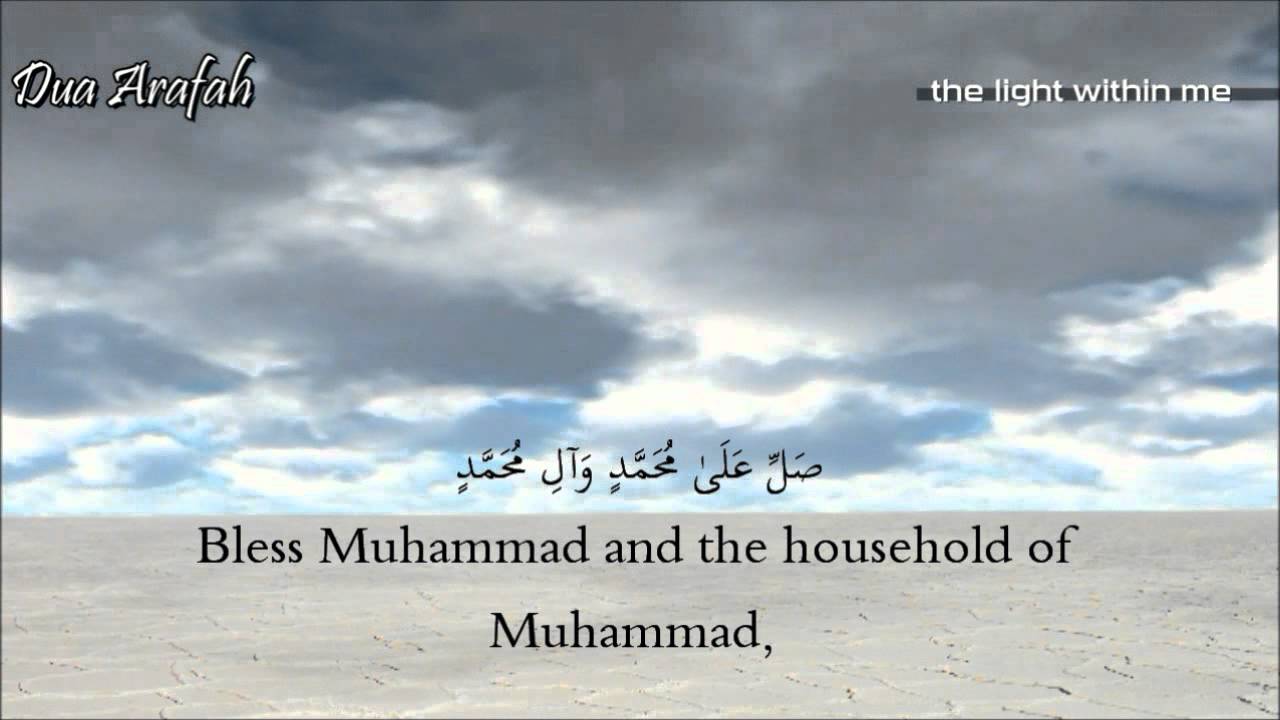
“Laa ilaaha ill-Allaah wahdahu la shareeka lah, lahu’l-mulk wa lahu’l-hamd wa huwa ‘ala kulli shay’in qadeer”
(There is no god but
Allaah alone, with no partner or associate; His is the dominion, to Him
be praise, and He has power over all things)
It was narrated from ‘Abd-Allaah ibn ‘Amr ibn al-‘Aas (may Allaah be pleased with him) that the Prophet (peace and blessings of Allaah be upon him) said: “The best of du’aa’ is du’aa’ on the day of ‘Arafah, and the best that I and the Prophets before me said is ‘Laa ilaaha ill-Allaah wahdahu la shareeka lah, lahu’l-mulk wa lahu’l-hamd wa huwa ‘ala kulli shay’in qadeer
(There is no god but Allaah alone, with no partner or associate; His is the dominion, to Him be praise, and He has power over all things).” Narrated by al-Tirmidhi (3585)’ classed as hasan by al-Albaani in Saheeh al-Targheeb (1536).

Sunday, 13 October 2013
The Scientific Miracles
in the Holy Quran

The
Quran is the literal word of God, which He revealed to His Prophet Muhammad  through the Angel Gabriel. It
was memorized by Muhammad ,
who then dictated it to his Companions. They, in turn, memorized it, wrote
it down, and reviewed it with the Prophet Muhammad .
Moreover, the Prophet Muhammad
reviewed the Quran with the Angel Gabriel once each year and twice in the last
year of his life. From the time the Quran was revealed, until this day,
there has always been a huge number of Muslims who have memorized all of the
Quran, letter by letter. Some of them have even been able to memorize all
of the Quran by the age of ten. Not one letter of the Quran has been
changed over the centuries.
through the Angel Gabriel. It
was memorized by Muhammad ,
who then dictated it to his Companions. They, in turn, memorized it, wrote
it down, and reviewed it with the Prophet Muhammad .
Moreover, the Prophet Muhammad
reviewed the Quran with the Angel Gabriel once each year and twice in the last
year of his life. From the time the Quran was revealed, until this day,
there has always been a huge number of Muslims who have memorized all of the
Quran, letter by letter. Some of them have even been able to memorize all
of the Quran by the age of ten. Not one letter of the Quran has been
changed over the centuries.
The
Quran, which was revealed fourteen centuries ago, mentioned facts only recently
discovered or proven by scientists. This proves without doubt that the
Quran must be the literal word of God, revealed by Him to the Prophet Muhammad ,
and that the Quran was not authored by Muhammad
or by any other human being. This also proves that Muhammad
is truly a prophet sent by God. It is beyond reason that anyone fourteen
hundred years ago would have known these facts discovered or proven only
recently with advanced equipment and sophisticated scientific methods.
Some examples follow.
,
and that the Quran was not authored by Muhammad
or by any other human being. This also proves that Muhammad
is truly a prophet sent by God. It is beyond reason that anyone fourteen
hundred years ago would have known these facts discovered or proven only
recently with advanced equipment and sophisticated scientific methods.
Some examples follow.
The Scientific Miracles
in the Holy Quran
The
Quran is the literal word of God, which He revealed to His Prophet Muhammad
through the Angel Gabriel. It
was memorized by Muhammad ,
who then dictated it to his Companions. They, in turn, memorized it, wrote
it down, and reviewed it with the Prophet Muhammad .
Moreover, the Prophet Muhammad
reviewed the Quran with the Angel Gabriel once each year and twice in the last
year of his life. From the time the Quran was revealed, until this day,
there has always been a huge number of Muslims who have memorized all of the
Quran, letter by letter. Some of them have even been able to memorize all
of the Quran by the age of ten. Not one letter of the Quran has been
changed over the centuries.
The
Quran, which was revealed fourteen centuries ago, mentioned facts only recently
discovered or proven by scientists. This proves without doubt that the
Quran must be the literal word of God, revealed by Him to the Prophet Muhammad ,
and that the Quran was not authored by Muhammad
or by any other human being. This also proves that Muhammad
is truly a prophet sent by God. It is beyond reason that anyone fourteen
hundred years ago would have known these facts discovered or proven only
recently with advanced equipment and sophisticated scientific methods.
Some examples follow.
,
and that the Quran was not authored by Muhammad
or by any other human being. This also proves that Muhammad
is truly a prophet sent by God. It is beyond reason that anyone fourteen
hundred years ago would have known these facts discovered or proven only
recently with advanced equipment and sophisticated scientific methods.
Some examples follow.

Among the special seasons of worship are the first
ten days of Dhu?l-Hijjah, which Allah has preferred over all the other
days of the year.
Ibn ?Abbas reported that the Prophet Muhammad
said: ?There are no days in which righteous deeds are more beloved to
Allah than these ten days.? The people asked, ?Not even jihaad for the
sake of Allah?? He said, ?Not even jihaad for the sake of Allah, except
in the case of a man who went out to fight giving himself and his wealth
up for the cause, and came back with nothing.? (Reported by
al-Bukhaari,
This indicates that these ten days are better
than all the other days of the year, with no exceptions, not even the
last ten days of Ramadan. But the last ten nights of Ramadan are better,
because they include Laylat al-Qadr (?the Night of Power?), which is
better than a thousand months.
1. The Prophet commanded us to recite a
lot of Tasbeeh (?Subhan-Allah?), Tahmeed (?Al-hamdu Lillaah?) and
Takbeer (?Allahu Akbar?) during this time.
2. ?Abdullaah ibn ?Umar reported that the
Prophet said: ?There are no days greater in the sight of Allah and in
which righteous deeds are more beloved to Him than these ten days, so
during this time recite a great deal of Tahleel (?La ilaaha ill-Allah?),
Takbeer and Tahmeed.?
3. These ten days include Yawm Arafah , on
which Allah perfected His Religion. Fasting on this day will expiate
for the sins of two years. These days also include Yawm al-Nahar (the
Day of Sacrifice), the greatest day of the entire year and the greatest
day of Hajj, which combines acts of worship in a way unlike any other
day.
4. These ten days include the days of sacrifice and of Hajj.
The Prophet said: ?When you see the new moon of
Dhu?l-Hijjah, if any one of you wants to offer a sacrifice, then he
should stop cutting his hair and nails until he has offered his
sacrifice.? According to another report he said: ?He should not remove
(literally, touch) anything from his hair or skin.? Among the good
deeds which the Muslim should strive to do during the first ten days of
Dhu?l-Hijjah are:
1. Fasting: It is Sunnah to fast on the
ninth day of Dhu?l-Hijjah, because the Prophet urged us to do good
deeds during this time, and fasting is one of the best of deeds. The
Prophet used to fast on the ninth of Dhu?l-Hijjah. Hunaydah ibn Khalid
reported from his wife that some of the wives of the Prophet said: ?The
Prophet used to fast on the ninth of Dhu?l-Hijjah, on the day of
?Aashooraa?, on three days of each month, and on Mondays and Thursdays
of each month.?
2. Takbeer: It is Sunnah to say Takbeer
(?Allaahu akbar?), Tahmeed (?Al-hamdu Lillaah?), Tahleel (?La ilaha
ill-Allaah?) and Tasbeeh (?Subhaan Allaah?) during the first ten days of
Dhu?l-Hijjah, and to say it loudly in the mosque, the home, the street
and every place where it is permitted to remember Allah and mention His
name out loud, as an act of worship and as a proclamation of the
greatness of Allah, may He be exalted. Men should recite these phrases
out loud, and women should recite them quietly.
The Takbeer may include the words ?Allahu akbar, Allahu akbar, la ilaaha illal-Allah; wa Allahu akbar wa Lillaahi?l-hamd
Reviving aspects of the Sunnah that have been
virtually forgotten is a deed that will bring an immense reward, as is
indicated by the words of the Prophet ?Whoever revives an aspect of my
Sunnah that is forgotten after my death, he will have a reward
equivalent to that of the people who follow him, without it detracting
in the least from their reward.?
3. Sacrifice: One of the good deeds that will bring a person closer to Allah during these ten days is offering a sacrifice, by choosing a high-quality animal and fattening it, spending money for the sake of Allah.
 Sacrifice, as practised by Holy Prophet Muhammad
(Pbuh)
is an essential religious rite in memory of the sacrifice performed by
Prophet Abraham. God put Abraham to a most difficult trial, the details
of which are described in the Quran. ?O my Lord! Grant me (Abraham) a
righteous (son)!? So We gave him the good news of a boy ready to suffer
and forbear. ?Then, when the the son reached the age to work with him,
he said: ?O my son I see in a vision that I offer you in sacrifice: Now
say what is your view!? (The son) said: ?O My father! Do as you are
commanded: You will find me if God so wills, one practising patience and
constancy!? So when they had both submitted their wills (to God), and
he had made him prostrate on his face (for sacrifice), We called out to
him: ?O Abraham! You have already fulfilled the vision!? Thus indeed do
we reward those who do right. ?For this was obviously a trial and We
ransomed him with a momentous sacrifice: and We left (this blessing) for
him among generations (to come) in later times: (37:100-109).
This is the origin of the Islamic precept of
sacrifice in fulfilment of God?s command provided in the Quran: ?... to
your Lord turn in prayer and sacrifice.? (108:2).
The aim of sacrifice, like all other fundamentals
of Islam, is to imbibe piety and self righteousness. It also promotes
the spirit of sacrifice for a right cause. To explain its purpose, God
says in the Quran. ?It is not their meat, nor their blood, that reaches
God, It is their piety that reaches God?: (22:37)
Prophet Muhammad (Pbuh) said: ?On the 10th of
Zil-Hijjah, there is no better act in the view of Allah than shedding
the blood (of slaughtered animals). And verily sacrifice earns the
approbation of Allah even before the drop of blood (of the slaughtered
animal) falls on the ground. Hence you should offer it in good spirit.
For every hair of the sacrificial animal, there is a blessing.? Here
are the precepts and practices pertaining to Qurbani, according to
Hanafi Fiqh.
Qurbani is Fardh for :
Qurbani, like Zakat, is essential for one who has
the financial means and savings that remain surplus to his own needs
over the year. It is essential for one?s own self.
However, a slaughter of animal can also be
offered for each member of one?s family. It may be offered, though it is
not essential, for one?s deceased relations, too, in the hope of
benediction and blessings for the departed souls.
What to Sacrifice
All the permissible (halal) domesticated or
reared quadrupeds can be offered for Qurbani. Generally, slaughter of
goats, sheep, rams, cows, and camels is offered. It is permissible for
seven persons to share the sacrifice of a cow or a camel on the
condition that no one?s share is less than one seventh and their
intention is to offer Qurbani. Age of Sacrificial Animals
Sacrifice of goat or sheep less than one year old
(unless the sheep is so strong and fat that it looks to be a full one
year old) is not in order. Cow should be at least two years old. Camels
should not be less than five years old.
Disqualifying defects
Sacrifice of an animal will not be in order if it
is one eyed, or blind, or has lost one third or more of its eyesight,
or one third or more of its tail, or its ear has been cut off, or it is
lame, or its bones have no marrow, or it has no ears by birth or its
horns have been broken from their roots, or it has no teeth at all. If
the number of teeth intact exceeds the lost ones, it is permissible. If
it has no horns by birth, or has less than one third broken horns, it is
permissible.
Distribution of meat
One should eat the meat of the sacrifice, give it
to relations and friends, (to non-Muslims also) and also to the poor in
charity. One third should be given in charity, but if it be less it
will not be a sin.
Injunctions on the use of skin
It is not permissible to give a portion of meat
or the skin of the slaughtered animal as wages. They should instead be
given to the needy in charity. Even the rope and cover of the sacrificed
animal should be given away as charity.
Intention
It is commendable that one who intends to offer a
sacrifice should refrain from having a hair cut, a shave, and pruning
of nails, from the 1st of Zil-Hijjah (upto the time he has performed
the sacrifice).
Intention In the first instance, one who proposes to offer sacrifice must make an intention to that effect.
Method of Sacrifice
The animal for slaughter should be laid on its
left side facing Kaabah and its throat cut open with a sharp knife, and
its blood allowed to drain. In the case of a camel, it should be allowed
to remain standing after its left fore leg has been stringed. A sharp
spear should then be thrust in its breast and on both sides of its neck,
and the blood allowed to drain.
Sacrifice, as practised by Holy Prophet Muhammad
(Pbuh)
is an essential religious rite in memory of the sacrifice performed by
Prophet Abraham. God put Abraham to a most difficult trial, the details
of which are described in the Quran. ?O my Lord! Grant me (Abraham) a
righteous (son)!? So We gave him the good news of a boy ready to suffer
and forbear. ?Then, when the the son reached the age to work with him,
he said: ?O my son I see in a vision that I offer you in sacrifice: Now
say what is your view!? (The son) said: ?O My father! Do as you are
commanded: You will find me if God so wills, one practising patience and
constancy!? So when they had both submitted their wills (to God), and
he had made him prostrate on his face (for sacrifice), We called out to
him: ?O Abraham! You have already fulfilled the vision!? Thus indeed do
we reward those who do right. ?For this was obviously a trial and We
ransomed him with a momentous sacrifice: and We left (this blessing) for
him among generations (to come) in later times: (37:100-109).
This is the origin of the Islamic precept of
sacrifice in fulfilment of God?s command provided in the Quran: ?... to
your Lord turn in prayer and sacrifice.? (108:2).
The aim of sacrifice, like all other fundamentals
of Islam, is to imbibe piety and self righteousness. It also promotes
the spirit of sacrifice for a right cause. To explain its purpose, God
says in the Quran. ?It is not their meat, nor their blood, that reaches
God, It is their piety that reaches God?: (22:37)
Prophet Muhammad (Pbuh) said: ?On the 10th of
Zil-Hijjah, there is no better act in the view of Allah than shedding
the blood (of slaughtered animals). And verily sacrifice earns the
approbation of Allah even before the drop of blood (of the slaughtered
animal) falls on the ground. Hence you should offer it in good spirit.
For every hair of the sacrificial animal, there is a blessing.? Here
are the precepts and practices pertaining to Qurbani, according to
Hanafi Fiqh.
Qurbani is Fardh for :
Qurbani, like Zakat, is essential for one who has
the financial means and savings that remain surplus to his own needs
over the year. It is essential for one?s own self.
However, a slaughter of animal can also be
offered for each member of one?s family. It may be offered, though it is
not essential, for one?s deceased relations, too, in the hope of
benediction and blessings for the departed souls.
What to Sacrifice
All the permissible (halal) domesticated or
reared quadrupeds can be offered for Qurbani. Generally, slaughter of
goats, sheep, rams, cows, and camels is offered. It is permissible for
seven persons to share the sacrifice of a cow or a camel on the
condition that no one?s share is less than one seventh and their
intention is to offer Qurbani. Age of Sacrificial Animals
Sacrifice of goat or sheep less than one year old
(unless the sheep is so strong and fat that it looks to be a full one
year old) is not in order. Cow should be at least two years old. Camels
should not be less than five years old.
Disqualifying defects
Sacrifice of an animal will not be in order if it
is one eyed, or blind, or has lost one third or more of its eyesight,
or one third or more of its tail, or its ear has been cut off, or it is
lame, or its bones have no marrow, or it has no ears by birth or its
horns have been broken from their roots, or it has no teeth at all. If
the number of teeth intact exceeds the lost ones, it is permissible. If
it has no horns by birth, or has less than one third broken horns, it is
permissible.
Distribution of meat
One should eat the meat of the sacrifice, give it
to relations and friends, (to non-Muslims also) and also to the poor in
charity. One third should be given in charity, but if it be less it
will not be a sin.
Injunctions on the use of skin
It is not permissible to give a portion of meat
or the skin of the slaughtered animal as wages. They should instead be
given to the needy in charity. Even the rope and cover of the sacrificed
animal should be given away as charity.
Intention
It is commendable that one who intends to offer a
sacrifice should refrain from having a hair cut, a shave, and pruning
of nails, from the 1st of Zil-Hijjah (upto the time he has performed
the sacrifice).
Intention In the first instance, one who proposes to offer sacrifice must make an intention to that effect.
Method of Sacrifice
The animal for slaughter should be laid on its
left side facing Kaabah and its throat cut open with a sharp knife, and
its blood allowed to drain. In the case of a camel, it should be allowed
to remain standing after its left fore leg has been stringed. A sharp
spear should then be thrust in its breast and on both sides of its neck,
and the blood allowed to drain.
Subscribe to:
Posts (Atom)


